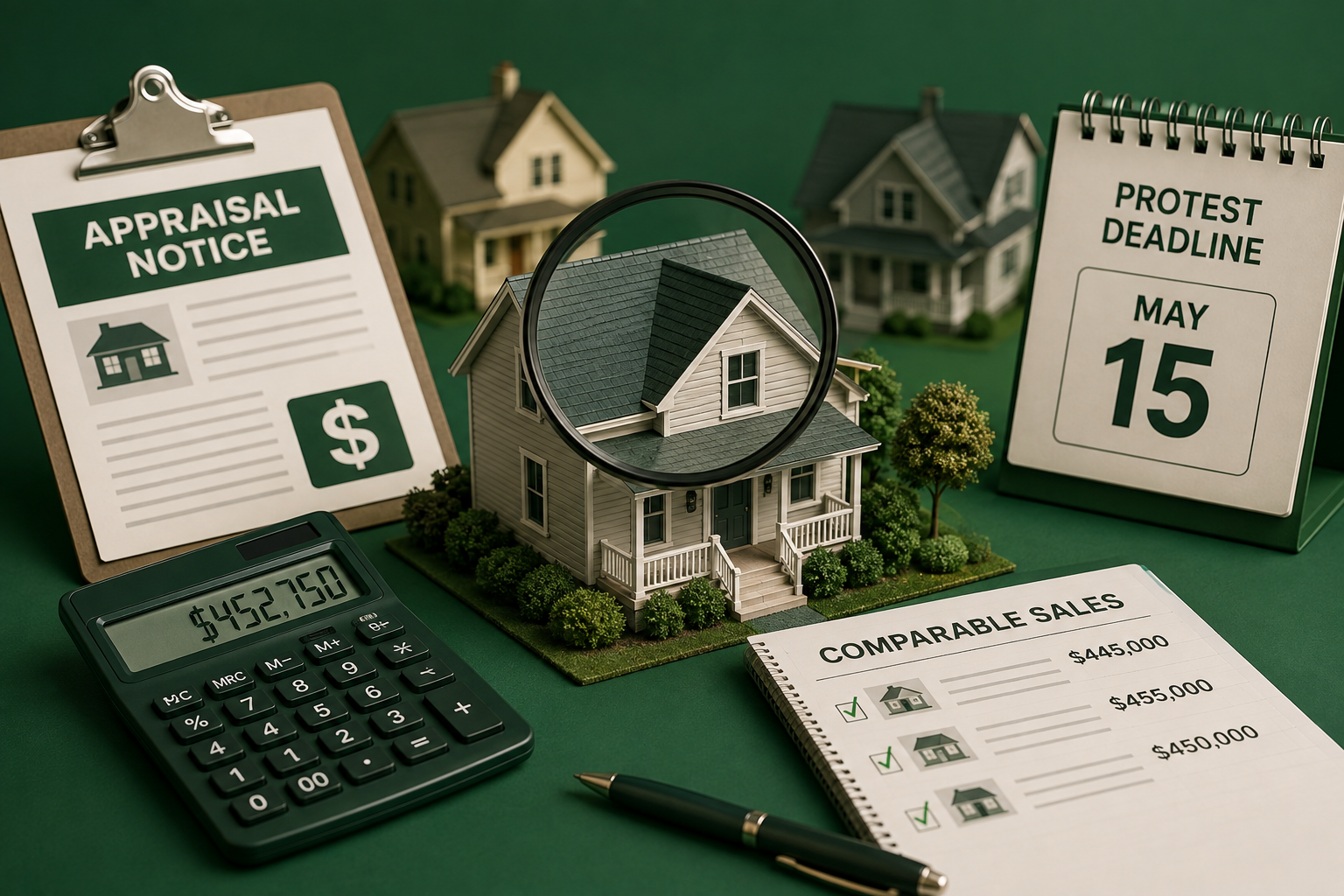

"Hearing" makes the process sound more formal than it usually is. Most protests are resolved at the informal stage, a conversation with an appraiser, not a hearing at all.
Stage one: informal review
You or your representative sits down with a district appraiser, walks through the comparable-sales evidence, and often reaches an agreed value on the spot. Many cases end here.
Stage two: the Appraisal Review Board
If informal review doesn't resolve it, the case goes to the ARB, an independent panel of local citizens, not district employees. Each side presents evidence, the panel asks questions, and a decision is issued, typically within the same session.
The ARB is independent of the appraisal district by design. Its job is to weigh the evidence both sides bring, not to defend the original number.
What to bring
Comparable sales, photos documenting condition issues, repair estimates, and anything that contradicts an assumption baked into the district's model. Vague dissatisfaction with the bill ("it just feels too high") rarely moves a result, specific evidence does.
Licensed consultants who do this daily know which evidence tends to land with a given district, which is most of what you're paying for when you don't handle a hearing yourself.